Roadside verges play a crucial role for nature’s recovery due to their ecological value and potential for aiding the reversal of biodiversity loss. These spaces serve as carbon storage hubs, habitats for over 700 wildflower species (nearly 45% of the UK's flora), and critical corridors that connect isolated wildlife habitats, enabling species movement and genetic mixing. As fringe habitats, i.e. remnants of previous land use, verges now act as last-resort refuges for many of our meadow-reliant species. Craig Blackwell used to be the County Ecologist at Oxfordshire County Council between 1990 and 2009 and one of his first jobs was establishing the Road Verge Nature Reserve (RVNR) Programme.
In Oxfordshire, there are approximately 2,000 miles of roads, excluding major highways such as the M40 and A34. This equates to around 4,000 miles of road verge. The majority are dominated by vigorous species including cow parsley and common hogweed. Those that remain species rich are largely designated as road verge nature reserves (RVNRs) by OCC, which is also responsible for their management. The total length of RVNRs is approximately 22 km. Of these 57 verges, a large proportion support calcareous grassland on the limestone of West Oxfordshire and the chalk of South Oxfordshire. More detail on the locations of RVNRs in Oxfordshire is available on the Oxfordshire County Council website. In this blog, I share personal experiences and observations about some of the road verges in West Oxfordshire where I live.
Firstly, is it worthwhile attempting to suppress dominant species such as cow parsley and common hogweed and replace them with more species-rich calcareous (found on chalk or limestone) grassland? Several years ago, I worked closely with the Wychwood Project (now The Wychwood Forest Trust) on an initiative titled ‘Suck, Seed and Sow’. The aim was to cut back the tall umbellifers adjacent to a limestone RVNR and then create 50% bare ground through scarification (loosening the top layer of soil and removing dead vegetation) and then sow with seed collected from the RVNR. This was both labour-intensive and time-consuming. Unfortunately, it was not a great success and the more vigorous species quickly reasserted themselves. The general conclusion was that this technique is unlikely to succeed on the majority of verges dominated by common hogweed and other vigorously growing herbaceous plants (plants that have no persistent woody stems above ground).More recently, I was involved with a local group keen to diversify one of the wide road verges in their parish. We considered the potential to enhance the botanical diversity and decided to focus on those parts of the verge which appeared to be more ‘open’ and already supported a range of common plants such as knapweed species and hedge bedstraw. With permission from OCC, vegetation was cut back, the ground scarified, and an appropriate wildflower mix, including yellow rattle, was sown in September and has had two spring seasons to develop. The yellow rattle has taken well and other robust species, such as knapweed, are benefiting from the less vigorous grass growth. OCC has taken over the management and I am optimistic that the area will continue to improve over time. This demonstrates the potential of restoring species-rich habitats where grass growth is low, and plants are already well established.
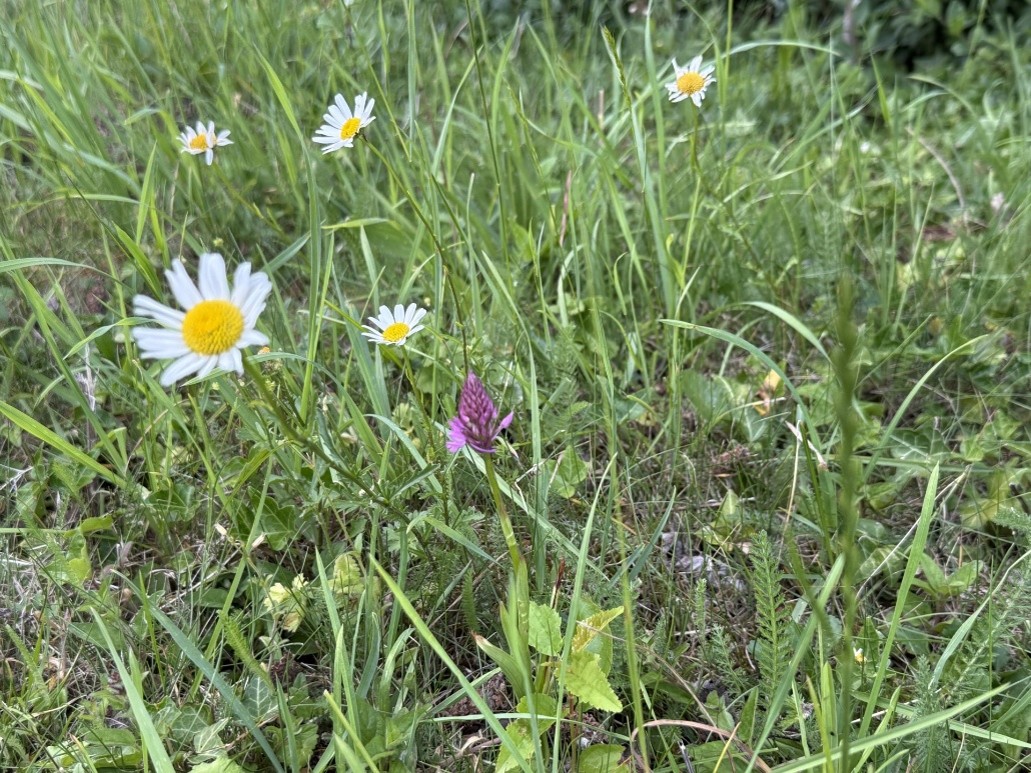
Additionally, on several road verges, certain flowers appear to be spreading naturally under a more relaxed highway maintenance regime. Cowslips and meadow cranesbill are noticeably increasing on verges where hogweed and cow parsley are less dominant.

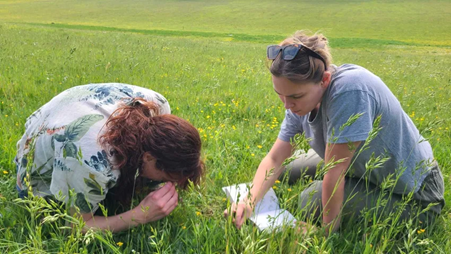
These findings suggest that several road verges can be improved through patient restoration works in the appropriate locations and that local communities can play a valuable role in this regard. Similarly, many verges are benefiting from a more relaxed management regime. A community group could consider raking off the cuttings (arisings) to prevent rotting vegetation enriching the soil or smothering wildflowers, especially if there is a lot left in situ. However, surveys conducted a few years ago revealed that only 16 of the 53 calcareous road verge nature reserves are recognised as being in good condition, so there is still a lot to do.
If you would like to help, check out the Wild Oxfordshire guidance on Verges and Grassland Edges, which outlines the importance of verges, types of verges, ownership, and management.


.jpg)
.JPG)