
Sarah’s Meadow is a newly formed green space in Milton under Wychwood within the Cotswolds National Landscape. Once rough grazing land, Sarah’s Meadow is today managed as a Local Green Space and maintained for ecological conservation and increased biodiversity for the benefit of wildlife and for the community to enjoy. The site was named Sarah’s Meadow in honour of Sarah Olney, from Natural England, whose vision first shaped the project. The four ponds and worm bench were funded and constructed by the Evenlode Catchment Partnership under the guidance of Wild Oxfordshire. We spoke to volunteer Elaine Brittan, whose work has helped shape the space into what it is today.
How Sarah’s Meadow began
“After the Neighbourhood Plan was ‘made’ in 2023, the parishwas given this piece of land. So then, ofcourse, we had to say, well, what do we do with it?
And that was the start of it because we then worked with the experts at WildOxfordshire, without whom we couldn't have done this. With the help ofCommunity Ecologist, Imogen Parker, and Jaqui Hide, who was on secondment withWild Oxfordshire during the summer of 2025, a botanical survey was completed,and a map and plan of the meadows were created. In the Neighbourhood Plan, wedesignated a number of Local Green Spaces and Blue-Green Corridors along thestreams. Local Green Spaces have legalweight and generally can’t be built on. But during the course of identifyingthese spaces, it became clear to me that we needed to do something a bit morethan just designate some areas on a map. So, a community action group was born – MiltonBiodiversity Monitoring and Action Group (BMAG). We worked closely with theParish Council especially Councillors Pat Ward and Graham Smith.
Practical work on the Meadow
“We've done various things on Sarah's Meadow. We cleared rubbish out of the stream and cut backthe growth. We’ve built hibernacula, planted trees and wildflowers. We’veimproved the access path across Sarah's Meadow; we’ve put a fence around two ofthe most important ponds with Trust for Oxfordshire’s Environment’s (TOE)funding. Then we built a dead hedge onthe inside of the fence using the brush from the stream clearance.
And we know it's working! This spring we did a “dip” in thestream and two of the ponds. It wasamazing! I was absolutely stunned at theamount of water life - and in just two years - hundreds of wriggling, dartingcreatures as well as the toads, frogs and newts which we already knew werethere. And many new plants! Behind allthis has been Imogen Parker’s excellent Management Plan which is guiding usstep by step.
We're very happy that Sarah’s Meadow is protected fornature, but we do also see a lot of people at the Meadow; it’s used by walkers,joggers, dog walkers, all sorts of people. It’s a balancing act – it’s acommunity amenity as well as a conservation area, and an important one. Apart from the village green, it's the biggestopen space we have.
We’ve also been experimenting with wildflowers, and of course they can strugglea bit in competition, but so far, they're holding their own, and we're workingon creating another patch, and another patch!
We’ve now put up two big signs, with Wild Oxfordshire’s help, including the habitatsmap that Imogen produced with some of the creatures and plants to show what sortof wildlife is there.
Sarah’s Meadow is a big project, but we have done otherthings like planting 6,500 young trees as part of Wild Oxfordshire’s HedgerowHeroes Project. Super support from Hedgerowsand Partnerships Project Officer, Jessica Bouwer - Wild Oxfordshire have beenso helpful and supportive!
We created community orchards using the Prince of Wales’s CoronationLiving Heritage fund - one just on the edge of a new housing estate, which isgood because the community has more access to nature through their orchard.The residents are adopting trees to look after them.”
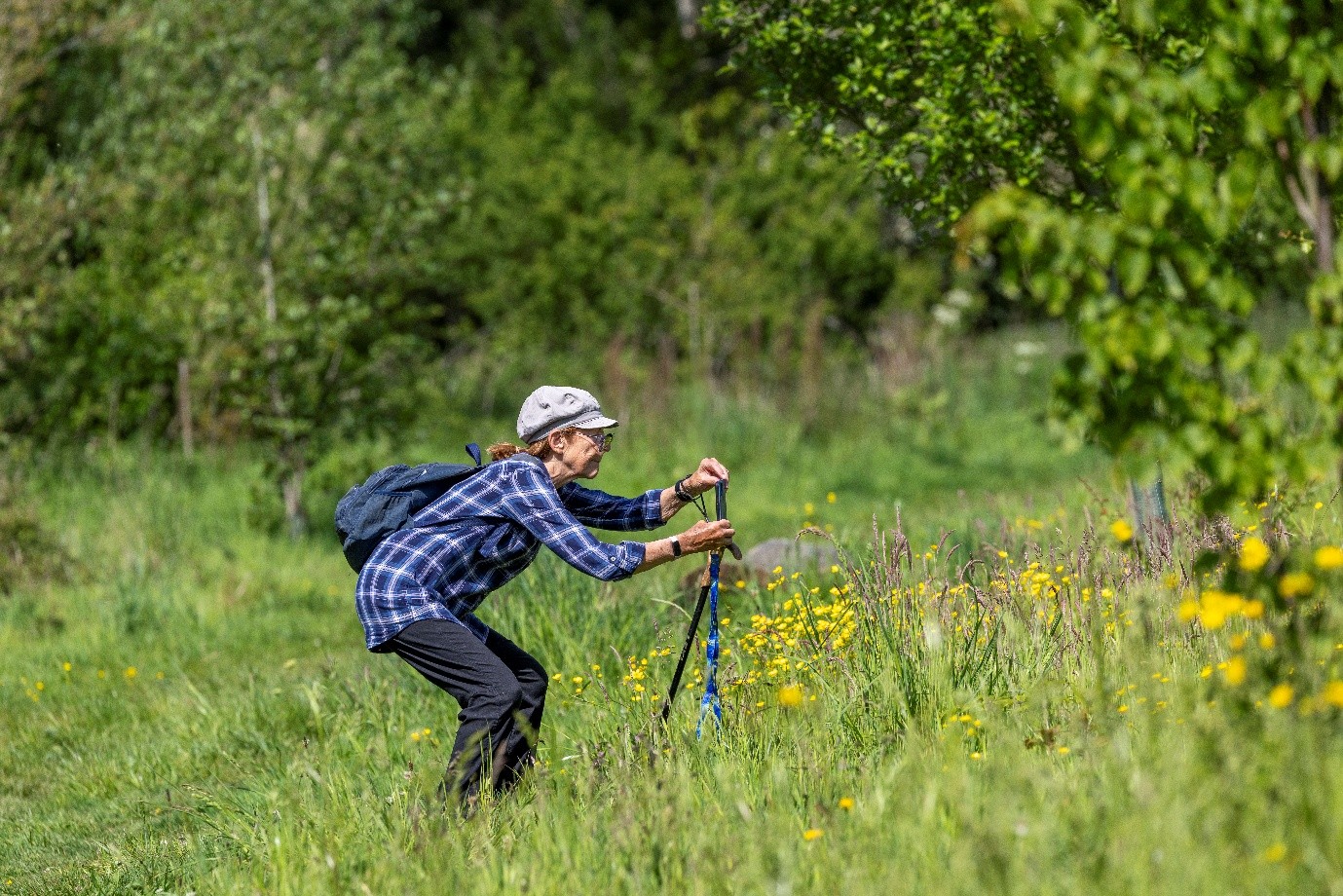
Personal impact
“For me, it goes back to my childhood. I was brought up in the middle of theindustrial Black Country with hardly a flower in sight apart from our garden.And birds, hardly one in sight apart from on the allotments. It’s an interestthat's always been there but has been a bit dormant with family life and mostlyliving in inner cities.
So, for me, it’s been massively important; it's made my life richer and fuller.And it’s good for me, physically and mentally. I think I can now identify the 20most common butterflies because of doing last year's Big Butterfly Count. Youkeep on learning!
It also gives you a purpose; retirement for me has become more meaningful. And it’s a truly vital purpose! I think you could say I've become morepassionate about nature; the more I’ve done, the more passionate I've become!”
Community impact and challenges
“The downsides have been the amount of time it's taken to get people actuallydoing something, not just talking, and to keep them motivated. There are around170 people on our mailing list, and we are trying very hard to involve youngpeople, but our approach to one of the secondary schools has been verydisappointing, frankly. But now, starting with a core of people, whoare the sons and daughters of a lot of us in the older group, childrenin the primary school, plus the scouts and anyone else we can recruit, we'restarting to get a core of young people.
And the rewards are coming now, and that's important becausethere's been a lot of slog, a lot of admin, a lot of sitting at the computer. Thewater life in the ponds, birds we have never seen before; birds that haven'tbeen seen in the locality for 40 years.”
Final thoughts
“Everybody must do their bit. For me, it's made me much more aware of theconnectedness of everything, climate change, sustainability, biodiversity…. theseare all much more important to me now”


.jpg)